Starting a new fitness routine requires more than just signing up at the gym. You need to understand your starting point, set realistic goals, and create a plan that fits your lifestyle. Homeownership works the same way. Many people get excited about finding the perfect house and overlook the critical financial preparation needed to support that purchase. Understanding your mortgage payment is the foundation of a successful real estate journey, and I'd like to help you get clear on the numbers.
When I work with buyers here in Rockledge, Florida, the question I hear most often is, "What will my monthly payment be?" The answer is more complex than most people realize. Your monthly mortgage payment isn't just about the house price and interest rate, though those matter significantly. It's a layered financial commitment that includes several moving parts working together.
Breaking Down the Components of Your Payment
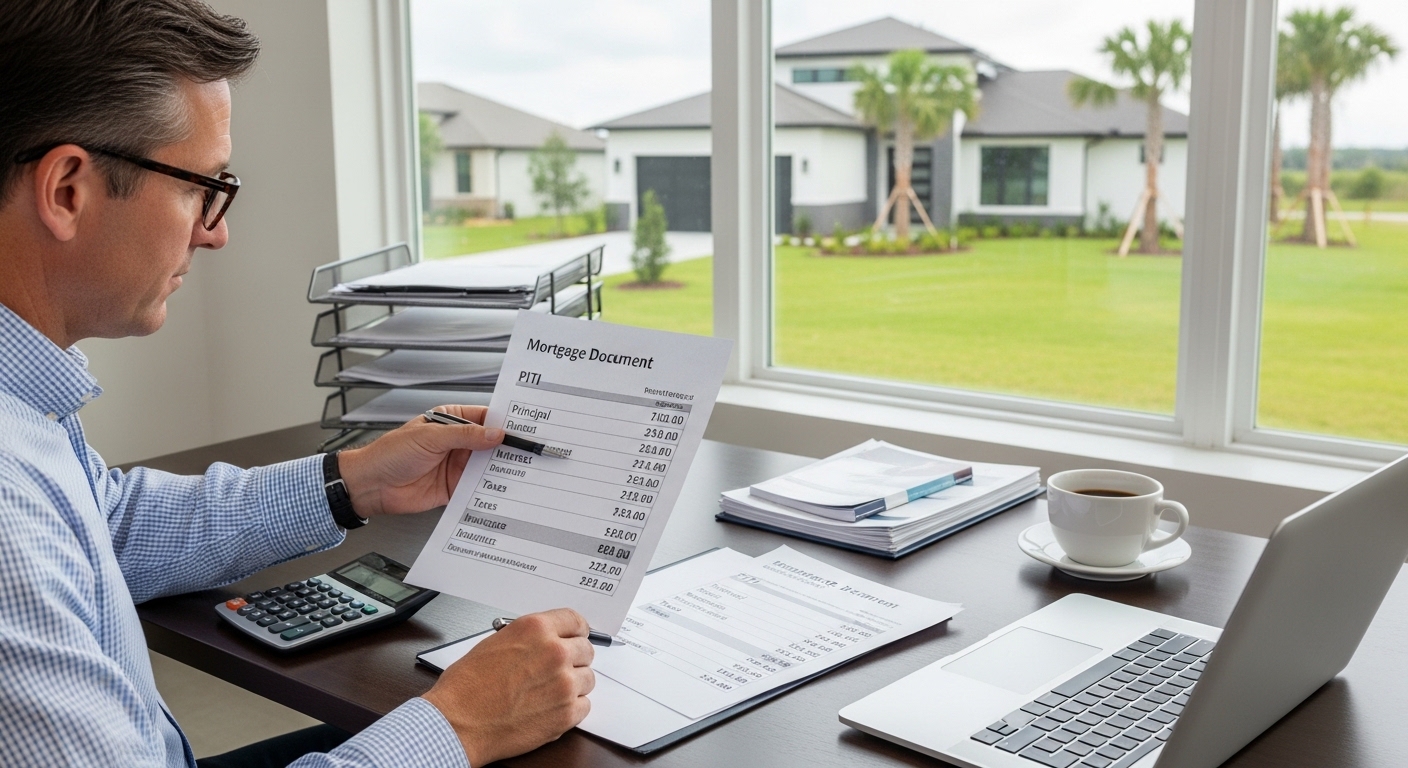
A typical mortgage payment includes principal, interest, taxes, and insurance. This combination is often referred to as PITI. Let me break each of these down so you understand exactly where your money is going each month.
Principal is the actual loan amount you borrowed. The loan principal is the amount of money you borrowed to buy your house, and you pay down the principal over the life of your loan. Early on in your mortgage, your payments seem like they're barely touching the principal. That's because interest takes priority during the initial years.
Interest is what the lender charges you for using their money. Interest is the amount you pay to borrow money from your lender, and it usually is a percentage of the amount you borrowed, based on several factors, such as mortgage type, down payment amount and credit score. This is the big variable in your payment, and it's why even a small difference in your interest rate can mean tens of thousands of dollars over the life of your loan.
Taxes are property taxes assessed by your local government. Taxes are the property assessments collected by your local government. In Rockledge, these vary based on your home's assessed value and can shift over time as property values change.
Insurance is homeowners insurance, which lenders require. Homeowners insurance is required financial protection you must maintain in case your property is damaged by fire, wind, theft or other hazards. Insurance premiums vary based on your home's value, age, condition, and location, so getting quotes from multiple insurers is smart.
The Impact of Your Down Payment
Your down payment affects more than just your loan amount. It's one of the most powerful levers you can control. A down payment of 20% or more can lower your monthly mortgage and help you avoid private mortgage insurance (PMI). This 20% threshold is important because falling short of it typically triggers mortgage insurance requirements.
Private mortgage insurance may be required if your down payment is less than 20%. PMI costs an average of 0.46% to 1.50% of your loan amount annually. For a $300,000 loan, that's an extra $1,380 to $4,500 per year—or roughly $115 to $375 monthly. This is why so many buyers prioritize saving for that 20% down payment.
What Goes Into Your Monthly Payment
Let's walk through a realistic example. Say you're looking at a $350,000 home in Rockledge with the current mortgage environment. The current average mortgage rate is 6.53%. If you put down 15%, you'd borrow $297,500.
For many homeowners, it's convenient to include property taxes and insurance as part of the mortgage payment through an escrow account. Each month, your lender collects a portion of your tax and insurance costs along with your principal and interest. These funds go into an escrow account, from which your lender pays the tax and insurance bills on your behalf when they're due.
In the early years of your mortgage, a large percentage of your payment goes toward interest. Over time, the balance shifts, and more of your payment goes toward reducing the principal and building your home equity. This change happens automatically as your loan matures, but it takes time.
Don't Forget Closing Costs
Before you even make that first mortgage payment, there's another significant expense: closing costs. Average closing costs typically range from 2% to 5% of the loan amount. On a $350,000 loan, that means you could pay $7,000 to $17,500 in closing costs.
Your list of closing costs includes lender fees, title insurance, appraisal fees, escrow expenses, and other charges necessary to complete the loan. These costs can feel overwhelming, but understanding them helps you plan appropriately. Closing costs can vary by thousands depending on your lender. Comparing multiple loan offers can help you reduce them.
When you're house hunting in Rockledge, one of the most critical steps is getting preapproved by a lender. This approval gives you clarity on what you can actually afford and prevents the heartbreak of falling in love with a home you can't qualify for.
The Ongoing Costs of Homeownership
Your mortgage payment is just one part of homeownership expenses. A common rule of thumb among financial planners is to budget 1%-4% of a home's value each year for maintenance and repairs. For a $400,000 home, that's $4,000-$12,000 annually to cover routine upkeep such as HVAC servicing and gutter cleaning, as well as larger system replacements.
If your Rockledge property is part of a homeowners association, there are also HOA fees to consider. Homes that are part of homeowners associations carry monthly dues that can range from $25 to $500 or more, depending on amenities and services covered. These fees can sometimes increase, so factor them into your long-term budget.
Testing Affordability: A Real-World Approach
One strategy I recommend to my buyers is to test drive the payment before fully committing. If the payment feels like a stretch, consider taking it for a financial test drive. For three months, put the difference between your current rent and this projected mortgage payment into a savings account. If you can live comfortably without that cash, the house is likely a feasible long-term commitment; if not, you may want to adjust your target home price or wait to build a larger down payment.
If the payment feels comfortable, your next move is to verify your debt-to-income (DTI) ratio. Even if a payment fits your monthly budget, a lender may reject your application if your total monthly debt obligations exceed 36% to 43% of your pre-tax income. This is another critical checkpoint that determines whether you're truly ready.
The Long-Term Financial Picture
The total cost of the loan is perhaps the most eye-opening number. It represents the sum of all payments over the life of the mortgage and reveals the true price of the house, after decades of interest are factored in. Many buyers are shocked to realize they'll pay nearly double the home price in total mortgage payments over 30 years. This is why some choose shorter loan terms or make extra principal payments when possible.
Your Partner in This Journey
Understanding your mortgage payment and all the associated costs is what separates confident homebuyers from stressed ones. As your local real estate agent serving Rockledge, I've helped dozens of buyers navigate this exact process. I can walk you through the numbers, help you understand what different loan programs mean, and guide you toward lenders who will give you honest answers about your financial picture.
Start your home search on HOUSEJET, where you can explore available properties in Rockledge and get a feel for the market. Then, let's sit down and talk about your goals, your budget, and what homeownership really means financially. Just like you wouldn't embark on a fitness journey without a plan, you shouldn't start your homebuying journey without understanding these crucial financial components.
Your path to homeownership in Rockledge starts with clarity. Let me help you get there.